

News
Typo of the week
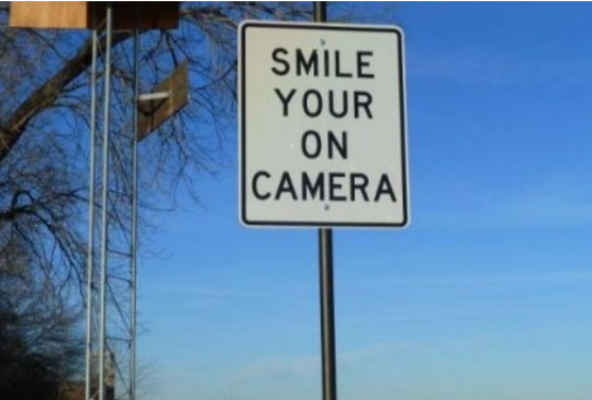
The old ‘your’ and ‘you’re’ will always get somebody.
MIND YOUR ‘English’ LANGUAGE
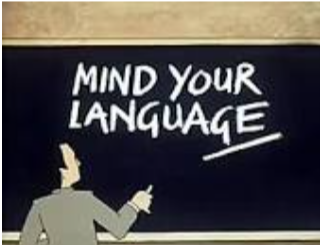
The first of many tutorials where the author discusses some common mistakes made by writers and speakers of English.
The ‘Queen’s English’ (very recently changed to the ‘King’s English’), is the term used to describe the most pristine form of the English language. However, advanced technology, increase in worldwide internet communication in English by speakers of English as a second language, and the use of social media, smart phones and other devices as a common means of instant communication have seen an evolution of a staccato form of English proving adequate for messaging. Abbreviated communication is the ‘name of the game’ for personal and business needs, where accuracy and articulation, as in old-fashioned writing, comes in a poor second to speed and acceptance that the jargon of the short message service (SMS) is adequate and comprehensible ‘speak’.
The aim of this column is to bring some of the common mistakes that are becoming the norm, but may not be for only the reasons mentioned above; rather the teachers of the language have either not focused on the importance of its correct use or the teachers themselves haven’t learned the principles as students.
Let’s start with the confusing ‘apostrophe’ – a small punctuation mark (‘)
There are three uses for the apostrophe:
- to indicate plurals of nouns, letters or symbols
- to show that one or more letters are missing in a word that has been shortened.
- to show possession by persons, places or things.
The first of more commonly confused written words in the English language is the use of the ‘apostrophe’. One never really knows what it is there for, in other words, its purpose. Let’s use a few examples of dos and don’ts:
1st use of apostrophe – Plural
Do not use an apostrophe when writing plural forms of nouns, like, pictures, photographs, flowers, videos and pizzas. A plural form tells you that there is more than one of something; so, there is no need to add an apostrophe, just an ‘s’ in most cases, like, photograph becomes photographs.
Do not use an apostrophe every time you use an ‘s’ with a singular noun, like, paintings. A common mistake made is to write it as ‘painting’s’. This is wrong.
2nd use of apostrophe – Contractions or shortened words
Do use an apostrophe when a word has a letter or two missing, like, ‘weren’t’, which means ‘were not’. The letter that is missing is ‘o’; therefore, use an apostrophe where you would normally put the ‘o’.
Another common mistake is when the word ‘you are’ is used. The shortened word for ‘you are’ is ‘you’re’. So, we are using the apostrophe where the letter ‘a’ is missing.
Do not mistake the word ‘your’ for ‘you’re’. An example would be if you were writing, ‘Let me know if you’re coming’, NOT ‘Let me know if your coming’. ‘Your’ is a possessive adjective.
Do say, ‘I like your idea’ or ‘It is your house’, or ‘I have your jacket’, because it is possessive.
Do not say, ‘Your right’. It should be ‘You’re right’ because you have used the apostrophe where the ‘a’ is missing in ‘you are’.
3rd use of apostrophe – Ownership
Do include an apostrophe before the ‘s’ of a single noun to show ownership, like, the ‘girl’s’ hat, which means the hat belongs to one girl.
Do include an apostrophe after the ‘s’ of a plural noun to show ownership, like, If you refer to ‘girls’ hats’, then you are stating that there are many owners of the hats.

Blurb
The National Seniors Australia-wide network is running a promotion to encourage their members to write down things about their lives and turn their memories and experiences into stories and become a published author. You can be part of the discount being offered to members. Click on our page to find out more.